How to Design a Cocktail Menu That Sells
How to design a cocktail menu that makes money: structure, how many drinks, margin by category, menu engineering and the mistakes that cost you sales.
A cocktail menu is not a list of pretty recipes. It is the tool your bar uses to decide what it sells, to whom and at what margin. A well-designed menu works for you every night. A badly planned one slows your team down, fills the storeroom with bottles that never move and leaves guests ordering the same thing every time.
I’m Enzo Ruiz, bartender and creative director at Stillroom, the gastronomic cocktail bar that opened its doors in Madrid in April 2026 with a menu of 19 cocktails. In this guide I explain how I build a cocktail menu from the business side, not from the recipe: you can find the technique behind each drink elsewhere, and I keep my own recipes to myself.
Before you create a single drink: concept, guests and operations
Almost every menu that fails does so before it starts. Answer three questions in writing:
- Who walks into your bar? Age, time of day, expected average spend, whether they come for one drink or a whole night out.
- What can your team execute? A menu with fifteen different preps needs more mise en place, more staff and more time per drink.
- What do you want to be remembered for? A couple of drinks that set you apart are worth more than twenty competent ones.
If you don’t have those answers, the menu turns into a catalogue of what you like, and that is not always what the bar needs. And if the bar is still a project, cross-check these answers against what it costs to open a cocktail bar.
How many cocktails to include and how to split them
There is no magic number. The test is operational: how many different drinks your team can make well when the bar is full, and how many different ingredients your storeroom can carry without stock sitting idle.
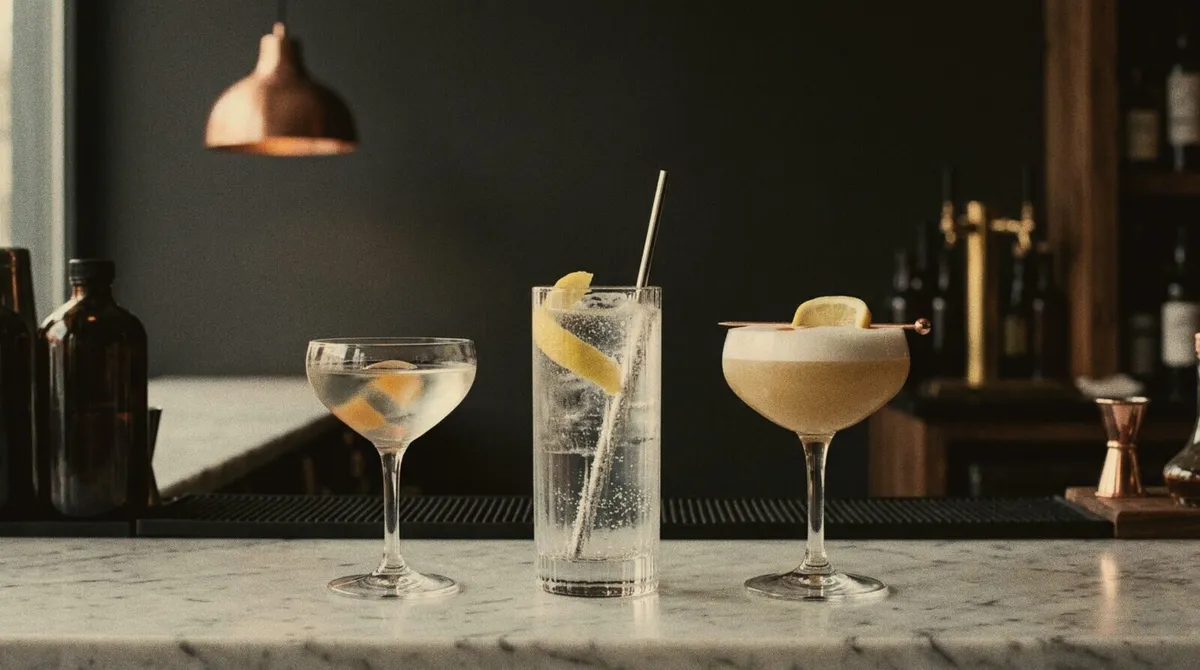
What does work is splitting the menu into families, so every guest finds something. At Stillroom, for example, the cocktail menu divides its 19 cocktails into three blocks: eight signature cocktails, seven reworked classics and four zero-proof drinks. It is not a formula to copy, but it illustrates the idea: a core that says who you are, a recognisable group that reassures, and an option for anyone not drinking alcohol.
| Block | Role on the menu | What to watch |
|---|---|---|
| Signature | Defines your identity and justifies the price | Difficulty of execution and cost of preps |
| Classics or twists on the classics | Reassures the guest who doesn’t want to take a risk | That the guest recognises the name |
| Zero-proof | Serves guests who don’t drink and adds to the spend | It shouldn’t be a box-ticking exercise: it deserves the same care |
| Entry-level options | Accessible drinks to start the night | Enough margin even at a lower price |
Margin: price comes from your costing, not from the competition
Looking at what the bar on the corner charges is a benchmark, not a method. The price of each cocktail starts with its real cost. If you haven’t worked it out, do it before you lay anything out: I explain how in cocktail costing: cost and price of every drink.
With your costs in hand, do three things:
- Set a cost target for each category. It doesn’t have to be the same for a classic as for a signature drink with house preps.
- Look at margin in euros, not just as a percentage. A cocktail with a better percentage but little absolute margin can leave you with less money than one with a worse percentage and a higher price.
- Recalculate after rounding. If the maths says €9.24 and you charge €9, your real margin is different.
Menu engineering: which drinks to push and which to review
Menu engineering cross-references two figures for every cocktail: popularity (how often it is ordered) and profitability (how much margin it leaves). That puts every drink into one of four groups:
| Popularity | Profitability | What to do |
|---|---|---|
| High | High | This is your engine: protect it, feature it, don’t touch it |
| High | Low | Review the recipe, size or price without the guest noticing |
| Low | High | Give it visibility: better position, better description, a team recommendation |
| Low | Low | Candidate to come off the menu |
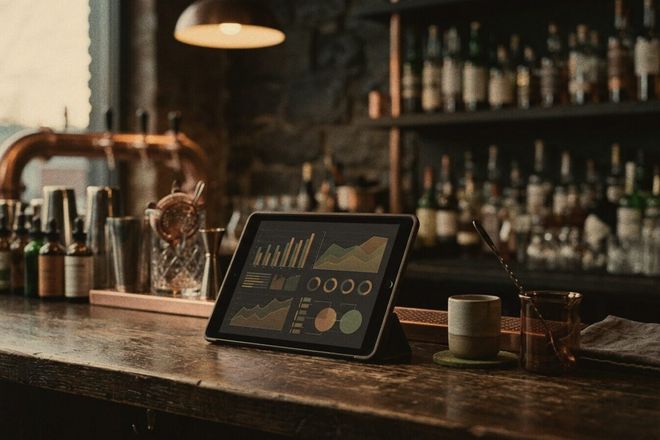
You need real sales to do this, so the first version of a menu is always a hypothesis. After a few weeks, open the sales report and judge on data, not sentiment.
Structure and writing: how a menu gets read
Guests don’t read a menu, they scan it. A few decisions that help:
- Order by a clear criterion: by family, by style (fresh, dry, bitter, fruity) or by strength. Choose one and stick to it.
- Keep descriptions short. Two or three key ingredients and a hint of flavour. If there is a house prep, name it, because it is part of the value.
- One price per drink, no frills. Avoid lining up a column of prices that invites guests to compare by eye and pick the cheapest.
- Look after the zero-proof section. If it is hidden or sits on the last line, guests read it as something added out of obligation. The same goes for how your team recommends it on the floor; I cover that in how to make a zero-proof cocktail menu pay.
- Fewer options per page. If the guest hesitates, the team takes longer to serve.
One idea that guides me: every cocktail should have an origin, a technique and a reason to be there, and the menu should let that show in a few lines.
How to explain the menu to your team
The menu doesn’t end at the printer. Your floor and bar team are the ones who turn it into sales, so they need to understand every drink before serving it. Before launch, run a tasting with the whole team: let them try every cocktail, describe it in one sentence and recommend according to the guest’s taste (“something fresh”, “something dry”, “zero-proof”). A menu the team knows how to sell moves better than an equally good one that nobody explains.
Allergens and obligations: not a design detail
The menu is also an information document. Unpackaged food served to the final consumer in Spain is regulated by Real Decreto 126/2015, of 27 February (the general rule on food information for unpackaged food sold to the final consumer and to catering establishments). According to its text, you must inform guests about substances that cause allergies or intolerances before the purchase is completed. This can be done verbally, as long as the information is also recorded in writing or in electronic form on the premises and is easy to consult; and in the sales area it must be clearly indicated where the information is available or that staff can provide it.
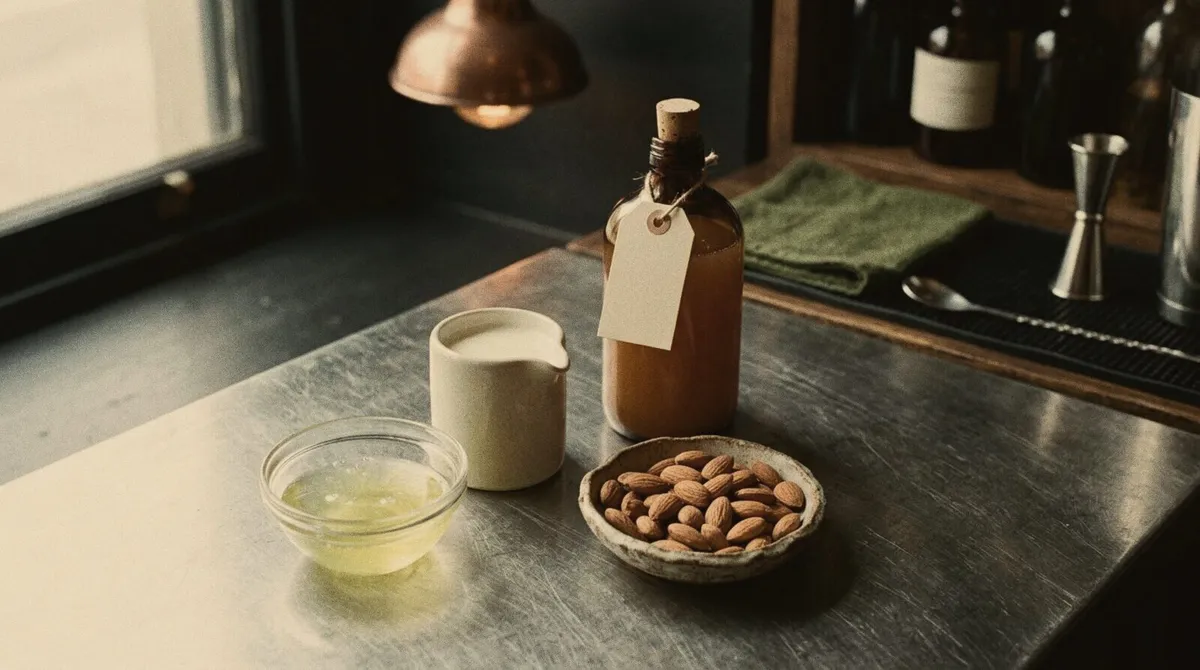
In a cocktail bar this matters more than it seems: egg white, dairy, nuts, or certain liqueurs and house-made preps can contain substances someone needs to know about. Check with a food safety professional how to comply in your venue, and make sure your team knows how to answer when guests ask.
Mistakes I see on cocktail menus
- Copying another bar’s menu. Every venue has a different clientele, team and costs.
- Long, slow menus. More options don’t always mean more sales, but they do mean more stock.
- Prices set on a hunch. Without costing, you don’t know which drinks make you money.
- Leaving no room for simple drinks. You need a drink that sells itself, with no explanation.
- Leaving it unchanged for a year. With quarterly data you can adjust without breaking the identity.
- Not training the team. If the bartender can’t describe the menu, the menu loses half its strength.
Checklist before you print
- Every cocktail has its costing and its margin worked out.
- The split into families covers every type of guest.
- There is a well-developed zero-proof option.
- Descriptions fit in two lines.
- The team can execute the whole menu at peak time.
- Allergen information is sorted.
- There is a date to review sales and adjust.
From menu to bar
A menu is good when the guest understands it, the team executes it without hiccups and the numbers add up. If you would like me to review it with you, or to design it from scratch with cost, style and operations together, we work on that through cocktail menu design. If you want your team to learn to build it on their own, I explain how I work with bar teams; and if you prefer ongoing support behind the bar, there is bar consultancy.
Topics: cocktail menu design · drinks menu · menu engineering · bar menu
Frequently asked questions
How do you design a drink menu for a bar?
Start with the guest and the concept, not the recipes. Define your categories, decide how many cocktails your operation can handle, cost every drink, set prices with a proper margin and review the menu against sales data a few weeks after launch.
What is the standard cocktail menu size?
There is no magic number. The right size is the number of different drinks your team can make well when the bar is full, and the number of ingredients your storeroom can carry without stock sitting idle. At Stillroom, our menu has 19 cocktails.
Should a cocktail menu be available as a PDF or online?
Yes, as a complement to the printed menu. A PDF or web version lets guests check it before they visit and lets search engines find it. Keep a single current version and update it at the same time as the printed one, or you will end up with different prices and drinks depending on where people look.
What is a drinks menu?
It is the document, printed or digital, that shows guests what they can order to drink, with a description and a price for each item. In a cocktail bar it is also your main sales and positioning tool.
What should a cocktail menu include besides the cocktails?
Short descriptions, clear prices, allergen information or where to ask for it, zero-proof options and, if it helps, a style cue (fresh, bitter, dry, fruity) to make choosing easier.
How often should you change a cocktail menu?
There is no fixed calendar. A sensible approach is to review sales and margins every quarter, drop what does not sell and change the menu in part, so you do not disorient regulars or the team.
Want to bring this to your bar?
Cocktail menu design
Your complete cocktail menu: concept, recipes, costing, glassware and a sales script for your team.
Bar audit and cost control
I come to your bar during live service, review your menu, costings and waste, and leave you a prioritised 90-day plan.