Mocktail Menu for Bars: Zero-Proof Drinks That Sell
How to build a profitable mocktail menu: how many zero-proof drinks to list, what to charge, how to name them and how to place them on your bar menu.
A well-thought-out mocktail menu is a line of business with its own margin, its own customers and its own place on the bar, not a favour to the guest who doesn’t drink. I treat it like the rest of the menu: costed, refreshed regularly and with a clear purpose. It is also a section that often gets improvised.
You won’t find mocktail recipes here. You will find the business decisions behind them: how many drinks to list, what to charge, how to name them and how to serve them without clogging the bar.
Why zero-proof deserves a proper place on your menu
Consumption of non-alcoholic and low-alcohol drinks is growing in Spain, although you need to read the data carefully. According to the research firm Circana, cited by Vinetur in November 2025, supermarket spending on low-alcohol wine grew by 35% between October 2024 and November 2025, and spending on alcohol-free beer rose 6.3% over the last year and 28.2% over three. Mind you, these are retail sales figures, not hospitality. They show a consumption trend, not how much your bar will sell.
What you can do is measure it in your own venue. Before adding anything, look at two things:
- How many times a day someone asks for “something without alcohol” and gets a 0.0 beer or a soft drink.
- How many people in a group end up with a drink that says nothing about your bar.
That is your real opportunity: the guest who is already sitting at your bar and is buying the cheapest thing on the menu.
Who orders zero-proof cocktails (and why)
You don’t need a study to spot the profiles who turn up at any bar:
- People who are driving or working afterwards.
- People who don’t drink for health reasons, pregnancy, medication or personal choice.
- People who alternate: one drink with alcohol, one without, to last the night.
- People who arrive with a group and want to raise a glass with something that looks just as considered.
Each of them is an opportunity: a drink with character gives them a reason to stay and order again. A soft drink with a slice of lemon doesn’t.
How many zero-proof cocktails to put on the menu
There is no single right number. At Stillroom, the zero-proof section has four house cocktails, on the same menu and with the same care as the signature serves. That is not a rule, just a proportion worth reviewing against your sales data.
My starting point:
- Three or four drinks. Fewer than three isn’t an offer; more than five complicates your mise en place without adding anything.
- Different profiles. Fresh and citrusy, herbal or bitter, fruity, spiced or with more structure. That way every guest finds something they like.
- Shared bases. Make two or three of them from the same cordials or bases. You add variety without adding work.
- Quarterly review. Drop the one that sells least and try another.
Also consider a low-ABV option for the guest who wants to drink less without giving up alcohol altogether. It is the natural bridge between those who drink and those who don’t.
What to charge and what margin to expect
This is where most margin is left on the table. The classic mistake is pricing at soft-drink level “because there’s no alcohol in it”. But the guest isn’t paying for the alcohol: they are paying for the ingredients, the time and the experience.
Look at margin in euros per glass, not just as a percentage. An 18% cost on a low price leaves little money in the till. The table below is an example with made-up numbers to illustrate the reasoning; work out your own with your real costs.
| Type of drink (example) | Cost of ingredients | Selling price excl. VAT | Cost as % of price | Gross margin per glass |
|---|---|---|---|---|
| Spirit-based cocktail | €2.40 | €10.00 | 24% | €7.60 |
| Simple zero-proof (juice and soda) | €0.90 | €5.00 | 18% | €4.10 |
| Crafted zero-proof (house base) | €1.60 | €8.00 | 20% | €6.40 |
The takeaway is clear: the crafted zero-proof drink has a cost percentage similar to the spirit-based cocktail and a much better margin per glass than the simple one. If you don’t know how to build this calculation, there is a step-by-step guide in how to cost a cocktail.
Three pricing rules I recommend:
- Place the zero-proof drinks next to the alcoholic cocktails, not next to the soft drinks.
- Don’t mark them down on the menu to “make them look cheaper”. If the preparation is worth it, so is the price.
- Include the cost of your house bases (ice, cordials, infusions) in the costing. It is the part most often forgotten.
How to name and present them
The menu tells guests whether this section matters or not. A few guidelines:
- A proper name for each drink. No “virgin” followed by the name of a classic. It is like apologising for what the drink doesn’t contain.
- A description of ingredients and flavour, in the same tone as the rest of the menu.
- The same section or box, on an equal footing. Hiding them at the bottom in small print sends the wrong message.
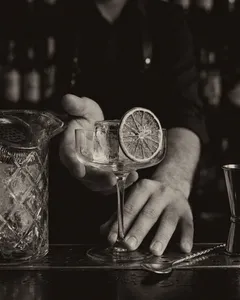
- The same glassware and the same careful garnish. The guest compares it with what the person next to them is drinking.
If you want to go deeper into how to structure the whole menu, you’ll find the general approach in how to design a cocktail menu.
Operations: keeping the bar from getting swamped
A zero-proof menu that slows down service ends up hated by the team. The key is to prep before opening:
- Batched bases and cordials, dated and rotated, so that service is just assembling and serving.
- Ingredients shared with the alcoholic menu (citrus, herbs, syrups), so you don’t multiply your stock.
- A spec sheet for every drink, so anyone on the team makes it the same way. It is the next step in bringing order to your bar.
- Allergen information on the menu itself (egg, milk, tree nuts or sulphites can be in a syrup or a foam). Check with your food safety adviser how to meet the obligations currently in force in Spain.
For the actual technique of making good zero-proof bases, I run a four-hour course, “Low-ABV and zero-proof”, at the Stillroom Academy. I deliberately leave recipes out here: what matters to you as an owner is the system.
How to tell whether your zero-proof menu is working
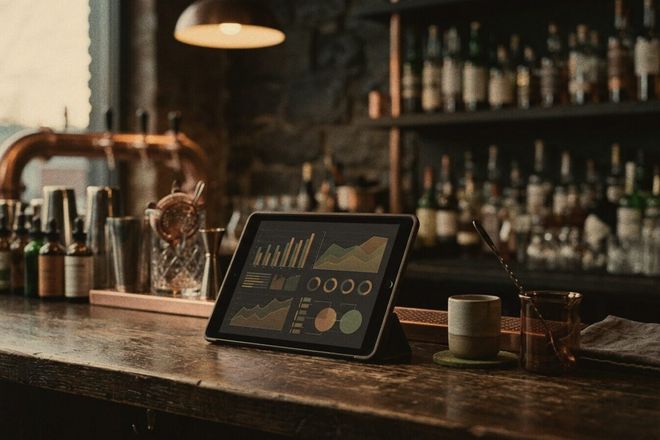
Don’t improvise: track four numbers over a quarter.
- Sales mix. What percentage of the drinks sold are zero-proof, and which one sells best.
- Margin in euros per glass for each drink, not just the cost percentage.
- Preparation time at peak. If a drink takes twice as long as the rest, redesign the base or drop it.
- Waste of bases and cordials. If you throw product away every week, you are overproducing or the drink isn’t moving.
With that you decide what to keep, what to reprice and what to replace. It is the same exercise you do with the rest of the menu; the zero-proof section deserves the same discipline. If your till system or your spreadsheet doesn’t separate these sales, start there.
Common mistakes
| Mistake | What it causes | How to avoid it |
|---|---|---|
| Soft-drink pricing | Low margin in euros per glass | Your own costing and value-based pricing |
| Only one option | The guest can’t see themselves in it | At least three profiles |
| Hiding them on the menu | Nobody orders them | Same section, equal footing |
| A different recipe every shift | Inconsistent quality | Spec sheet and batched bases |
| Lots of sugar without saying so | You lose the guest who watches what they drink | Balance with acidity and bitterness, and be clear on the menu |
How I work on this with a bar
When I review a menu, the zero-proof section tells me a lot about the rest: if it has been thought through, the rest of the menu usually has too. My method is always the same: start from your sales, decide how many drinks and which profiles, work out the costing and design the presentation so the team can sustain it at peak time.
If you would like us to go through your real menu, you can see how I work on signature cocktails for your bar or on the cocktail menu design service, and get in touch via the contact page.
Topics: mocktail menu · zero-proof cocktails · non-alcoholic drinks · bar margin
Frequently asked questions
Which cocktails are low in alcohol?
Low-ABV cocktails are built on lower-strength bases such as vermouth, sherry-style fortified wines, bitter aperitifs or sparkling wine, lengthened with soda, tonic or juice. They are the natural bridge between the alcoholic menu and the zero-proof section, and you should cost them exactly like the rest of the menu.
Is it enough to offer alcohol-free beer and wine?
They cover part of the demand and are worth stocking, but they do not replace a properly made cocktail. Someone who doesn't drink and comes to a cocktail bar usually wants the same experience as everyone else at the table. A drink with your own prep also lets you charge a price, and earn a margin per glass, that a bottled product rarely reaches.
What are the best non-alcoholic cocktails for a professional menu?
The ones that fit your bar's concept and can be repeated at the same quality at peak time. Aim to cover several profiles: one fresh and citrusy, one herbal or bitter, one fruity and one with spice or more structure.
What is a non-alcoholic cocktail called?
You will hear mocktail, non-alcoholic cocktail or zero-proof drink. On a professional menu, giving each drink its own name works better than the generic label or the word “virgin”.
Is a non-alcoholic drink healthy?
Not necessarily: many contain a lot of sugar. If you want to position yourself as the lighter option, watch the sugar in your cordials and syrups and be honest about what goes into each drink.
Want to bring this to your bar?
Signature cocktails
I create cocktails with their own identity for your bar, restaurant, hotel or brand, each with a spec sheet and a simplified version.
Cocktail menu design
Your complete cocktail menu: concept, recipes, costing, glassware and a sales script for your team.